
External size and internal size describe two different things
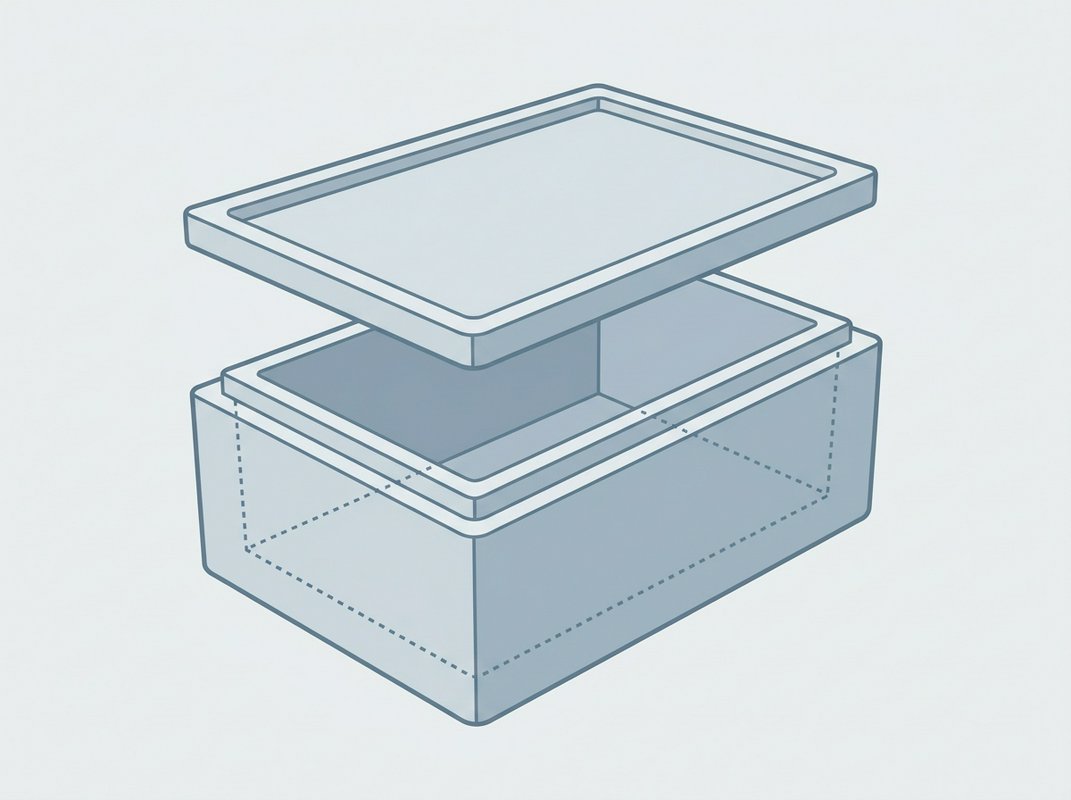
A polystyrene box has two sets of measurements, and they are not the same number. The external dimensions describe the footprint of the box as it sits on a shelf or in a van. The internal dimensions describe the cavity you actually pack into, and that cavity is smaller on every side because the wall takes up room.
The gap between the two comes from wall thickness, expressed in millimetres. A box built for longer cold-holding tends to have a thicker wall, because a thicker wall slows heat transfer, and that thickness is taken straight out of the space you can pack into. Two boxes with identical external dimensions can hold noticeably different amounts if one has a 20 mm wall and the other has a 30 mm wall.
This matters most when a supplier lists only one figure. A box quoted at 400 × 300 × 200 mm as an external measurement will pack less than a box quoted at 400 × 300 × 200 mm internally, sometimes by a margin that decides whether your trays, punnets or bags actually go in. If a listing does not say which figure it is giving you, that is worth asking about before you order.
How do you work out the internal size you need?
Start with the item you are actually packing. Measure its length, width and height at the widest points, because that is the space it needs before anything else goes in with it.
Add clearance for what travels alongside the product
Ice packs, gel packs, dry ice and padding all take up room inside the box, on top of the product itself. A tray of fish sitting flat still needs space above it for an ice pack, and a cake box needs clearance on every side if it is going in with padding to stop it shifting. Guidance on how much clearance different cooling methods need is covered in drain holes, ice packs and dry ice.
Add these figures to your product measurements to get the smallest internal size that will actually work for the shipment.
Check the total against the internal size.
Once you have that figure, compare it to the box's stated internal dimensions. A supplier listing the external size alongside a wall thickness lets you work out the internal space by subtracting the wall thickness from each side, but where a box lists internal dimensions directly, that figure is the one to check your total against.
- Measure the product at its widest point, in each dimension
- Add clearance for ice packs, gel packs or dry ice where used
- Add clearance for padding or dividers if the product needs to be held still
- Compare the total to the box's internal size.
The buyer's guide covers wall thickness and lid types in more detail if either of those affects how much internal space you end up with.
Know the internal size before you order
Once you have the internal dimensions your product needs, the directory lets you filter boxes by that figure.